

PILT Roundtable at 2026 IAC Annual
15 Oct 2026, by Clay Boeckel Share :


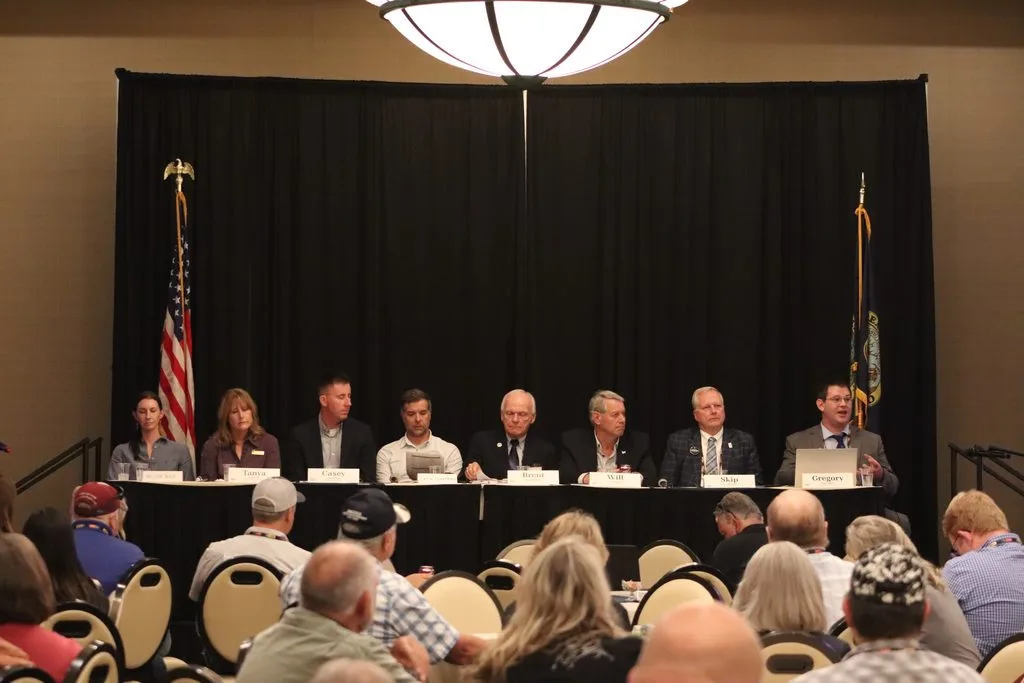
At the IAC Annual Conference, county commissioners, federal land managers and congressional staff gathered at the Riverside Hotel for the PILT Intergovernmental Roundtable, a featured session of Hosted by the National Center for Public Lands Counties (NCPLC) and moderated by Gregory Nelson, Director of the National Center for Public Lands Counties, the roundtable put county voices at the center of a conversation about Payments in Lieu of Taxes (PILT), a program that touches counties all across Idaho.
Gregory opened by framing what’s at stake. More than 60 percent of Idaho is federal land that can’t be taxed, yet our counties still maintain the roads and provide the public safety, search and rescue and emergency response that land and its visitors depend on. PILT helps fill that gap, and in FY2026 it sent $49.6 million to Idaho counties, the eighth-largest total in the nation. Even so, it was never meant to match what the land would bring in if privately owned, and it doesn’t grow with visitation or service costs. A short PILT 101 video featuring Idaho County’s own Commissioner Skip Brandt got everyone on the same page before the panel began.
The heart of the discussion came from three very different counties. Commissioner Skip Brandt shared what PILT means for Idaho County, the state’s largest county and home to much of the Frank Church-River of No Return Wilderness. Commissioner Will Naillon explained how far $1.10 million really goes in Custer County, where about 4,600 residents serve the Sawtooth National Recreation Area. Commissioner Brent Reinke described how Twin Falls County balances PILT against growth, rising equipment costs and the crowds drawn to Shoshone Falls and the Snake River Canyon.
Idaho’s federal and congressional partners rounded out the conversation. Allison Ginn of the Boise National Forest highlighted county partnerships like Good Neighbor Authority and shared stewardship, and Tanya Thrift of BLM Idaho discussed how multiple-use management shapes the demands placed on counties. Casey Attebery of Senator Crapo’s office and Craig Quarterman of Congressman Simpson’s office shared what they’re hearing from counties and what to watch on PILT and Secure Rural Schools funding. The big takeaway: PILT is a partial offset, and making it work takes counties, agencies and Congress pulling in the same direction.
Thank you to Gregory Nelson and NCPLC for hosting such a valuable session, and to Commissioners Brandt, Naillon and Reinke, Allison Ginn, Tanya Thrift, Casey Attebery and Craig Quarterman for sharing their time and insight. For those wanting more information they can make use of NCPLC’s PILT 101 video, PILT simulator and Knowledge Hub. We look forward to continuing the conversation with our federal and congressional partners in the year ahead.