


Short-Term Rental Bill Passes Senate, But Not Without Opposition
16 Mar 2026, by Sara Westbrook Share :


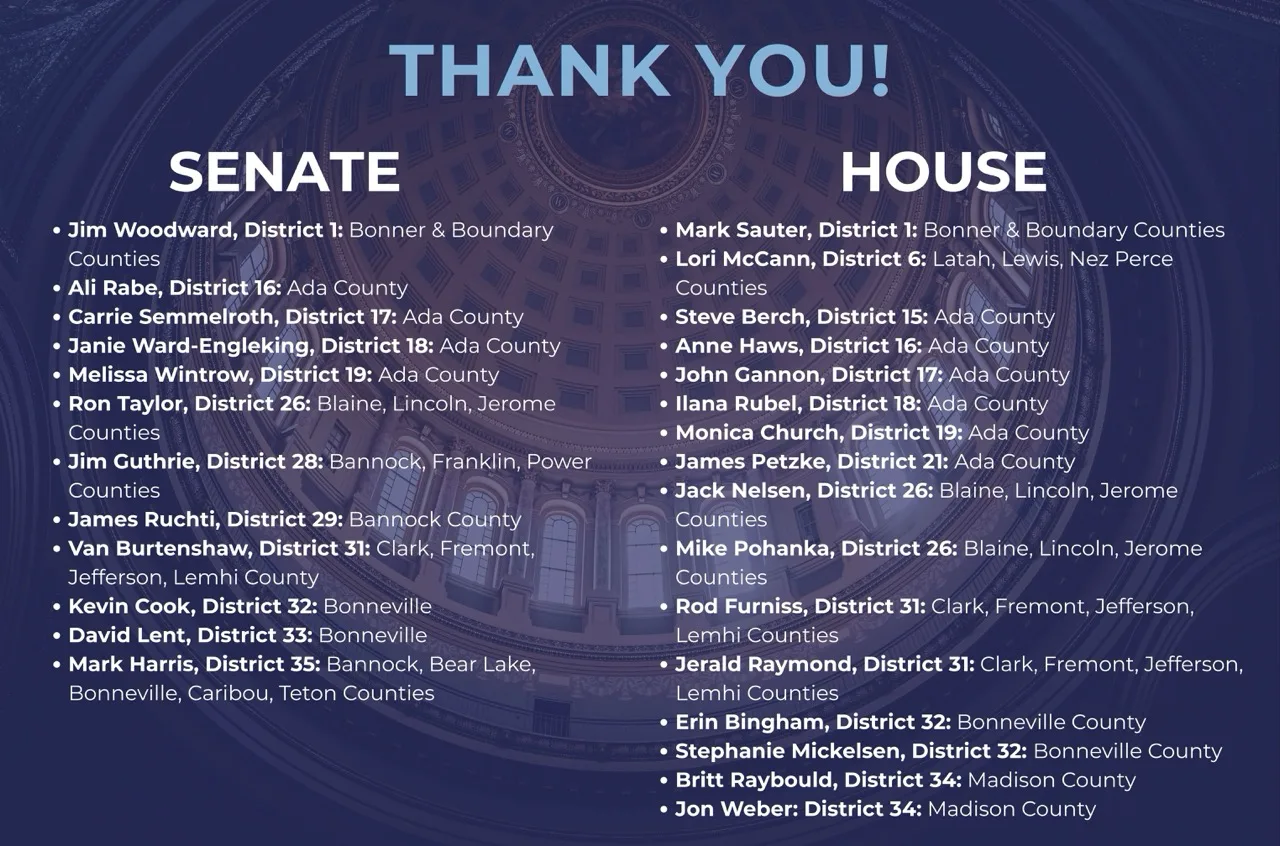
In recent weeks, the Idaho Association of Counties contacted House and Senate members to express concerns about House Bill 583 on short-term rentals. While we appreciate the inclusion of some safety requirements, such as smoke detectors in guest rooms, fire extinguishers, and carbon monoxide detectors on each floor, the bill prevents counties from identifying short-term rental properties. Without a registration system, counties cannot notify owners of safety requirements or conduct inspections, making enforcement impossible. Consequently, even the permitted safeguards cannot be applied consistently, putting renters and communities at risk. We thank the 16 Representatives and 12 Senators who voted No on House Bill 583, acknowledging the need for a more balanced approach.
We believe that protecting the safety of short-term renters and preserving the property rights of all Idaho residents are equally important goals. We urge a balanced approach that both upholds essential safeguards and affirms reasonable autonomy for property owners. By balanced legislation, we mean an approach that allows local governments to enforce critical health and safety protections for short-term renters—such as fire and carbon monoxide safety requirements—while also ensuring that property owners’ rights and decision-making authority over their properties are maintained. House Bill 583 omitted the ability to enforce these protections and did not adequately balance the rights of long-term residential property owners with those of short-term rental operators. Additionally, House Bill 583 could have unintended consequences for owners of properties not used as short-term rentals. For example, the lack of a clear registration system to identify short-term rental properties may cause confusion or lead to unnecessary compliance requests for traditional homeowners, as local governments try to determine which properties are actually used as short-term rentals.
While House Bill 583 has passed both the House and the Senate, we strongly recommend that legislators and stakeholders continue their efforts during the interim to create a more equitable solution. This revised approach should empower counties and cities to enforce ordinances safeguarding the health and safety of short-term renters. A key component of this would be establishing a straightforward registration requirement that counties and cities could use to identify short-term rentals, thereby ensuring the enforceability of the local ordinances allowed in House Bill 583. Addressing these issues will prevent potential undue regulatory burdens on non-short-term rental owners while ensuring short-term rentals meet reasonable safety standards. This approach balances the interests of all property owners and supports local governments in enforcing safety requirements.